AI as the interface, not a feature.
Match scores appear on every job the candidate sees, everywhere. Not tucked into a settings page or a marketing splash — the AI is the way the product works.
TalentBridge is a hiring platform built as a product, not a one-off. A candidate uploads one resume and gets ranked matches across every employer on the platform — with the skills that matched called out on every card. Employers post roles and see the same scores. Built end-to-end: product design, front-end, and the AI that scores every application against every role.
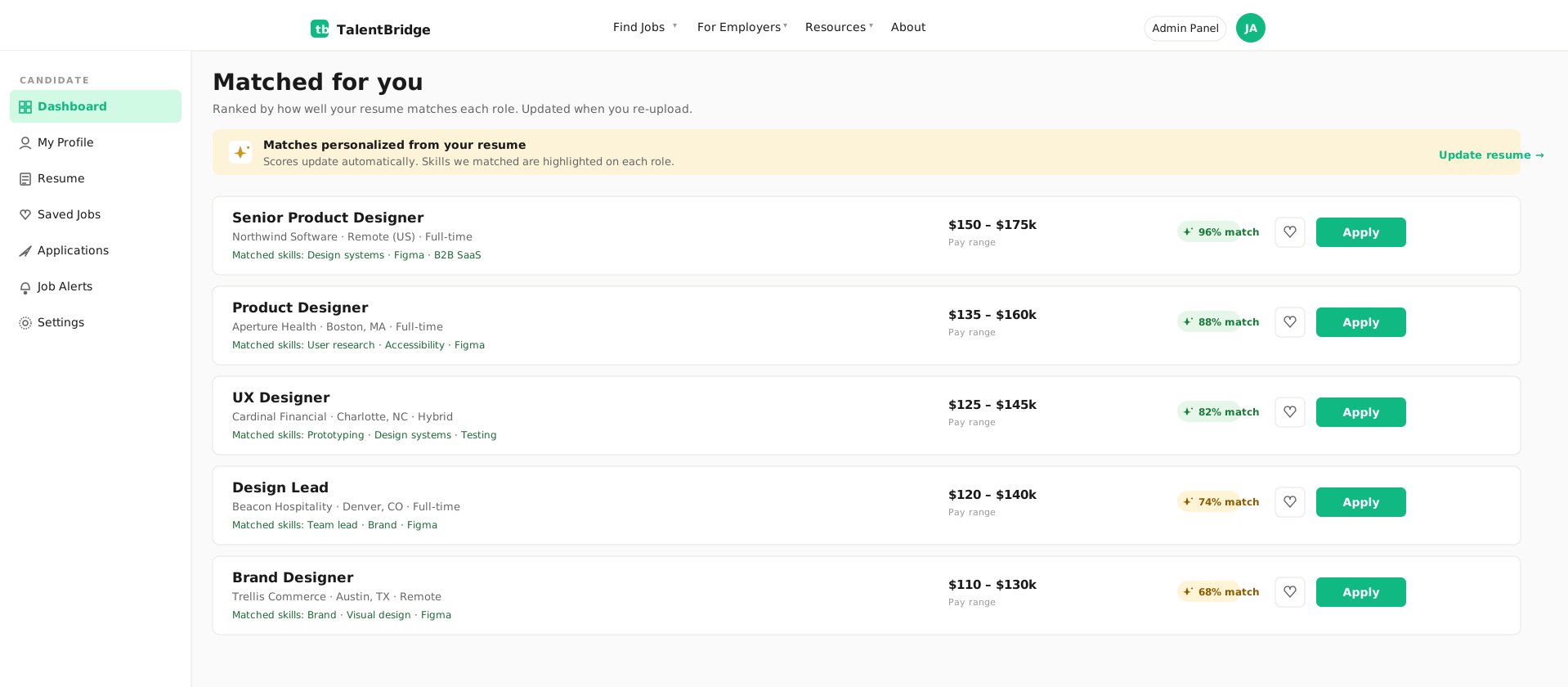
Job boards are a black box. A candidate uploads a resume, then scrolls pages of unrelated listings hoping something matches. Employers get hundreds of applications a week from people who were never a fit. Both sides lose, and every company running its own careers page rebuilds the same broken loop from scratch. TalentBridge exists to fix that loop once and license it: upload a resume, and the platform immediately shows the roles you actually qualify for — ranked by fit, across every employer on it, with the reasoning visible.
Built as a product from day one — multi-tenant, brandable, and organized around a single center of gravity: the AI match. Every decision started there.
Match scores appear on every job the candidate sees, everywhere. Not tucked into a settings page or a marketing splash — the AI is the way the product works.
Every match includes 'why we matched you' — a list of the specific skills, experience, and preferences the AI pulled from the resume. If the AI can't defend the score, it doesn't get to display one.
The whole loop — resume upload, parse, score against every open role, rank, render — completes in the time it takes to switch tabs. Anything slower breaks the trust of the interaction.
Candidates, employers, and platform admins all read the same score from the same model — no parallel truths. Employers onboard themselves, post roles, and manage their own pipeline behind role-based access and row-level security, so one deployment serves every company on it. Nothing in the data model, the taxonomy, or the matching assumes a single sector: the same platform runs a software company, a hospital network, and a restaurant group side by side.
Design, front-end, AI wiring, deployment. No hand-off across half a dozen teams. The person shipping the pixel is the person shipping the prompt is the person shipping the deploy.
A candidate uploads their resume. The AI parses it into structured signal — experience, skills, certifications, seniority, location and work preferences. That signal is scored against every open role from every employer on the platform, in any industry. The top matches surface immediately, with the matched skills highlighted on each card. No scroll-and-hope.
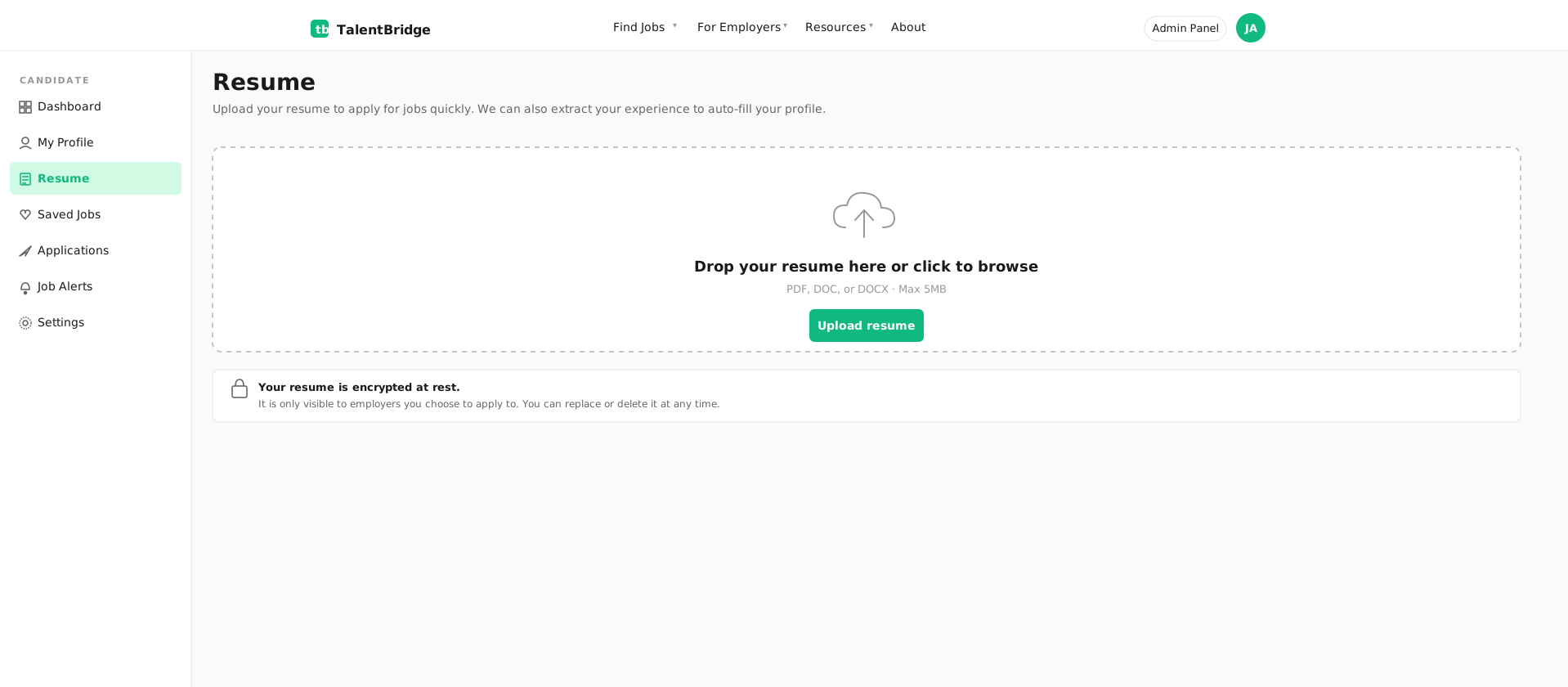
Drag and drop. PDF, DOC, or DOCX up to 5MB. Encrypted at rest, only visible to employers the candidate applies to.
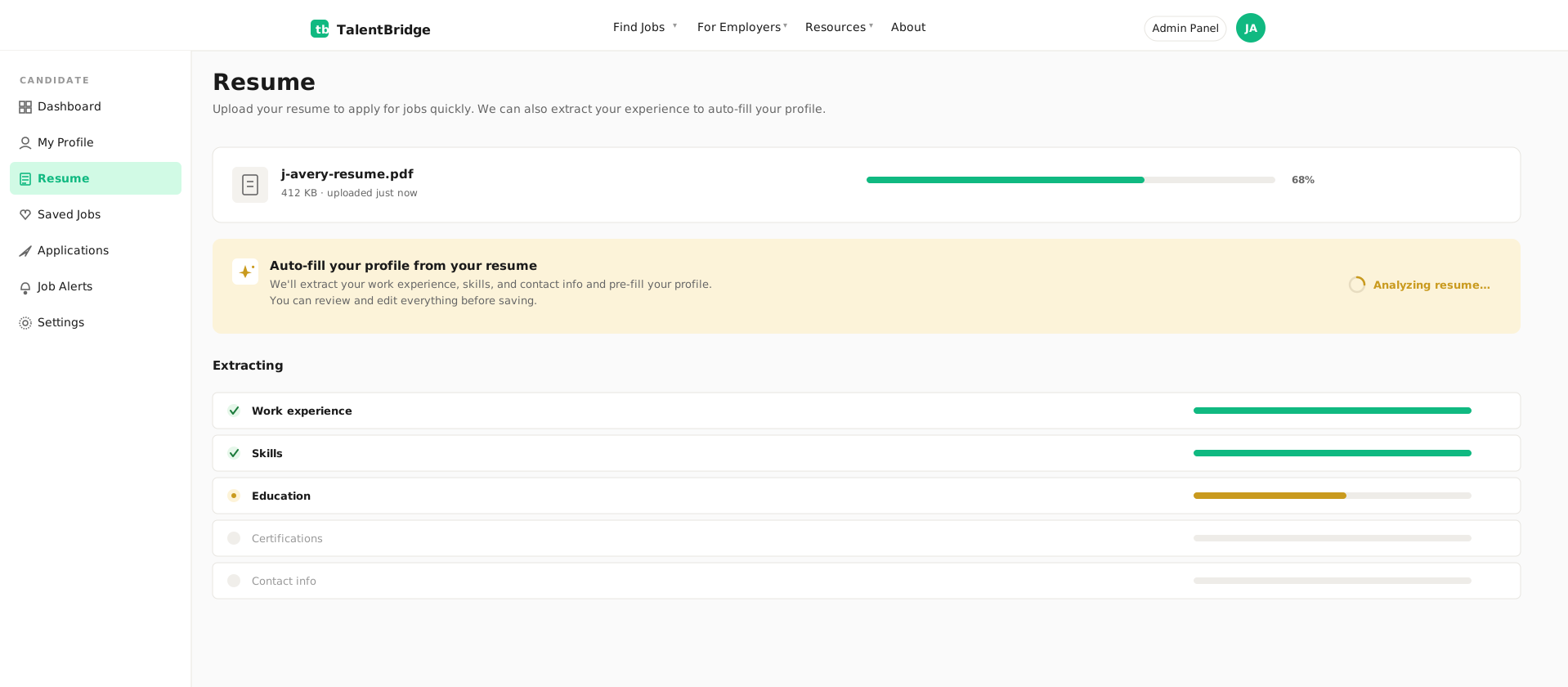
The AI parses the resume in seconds. Skills, experience, education, contact info — all extracted for pre-fill and matching.
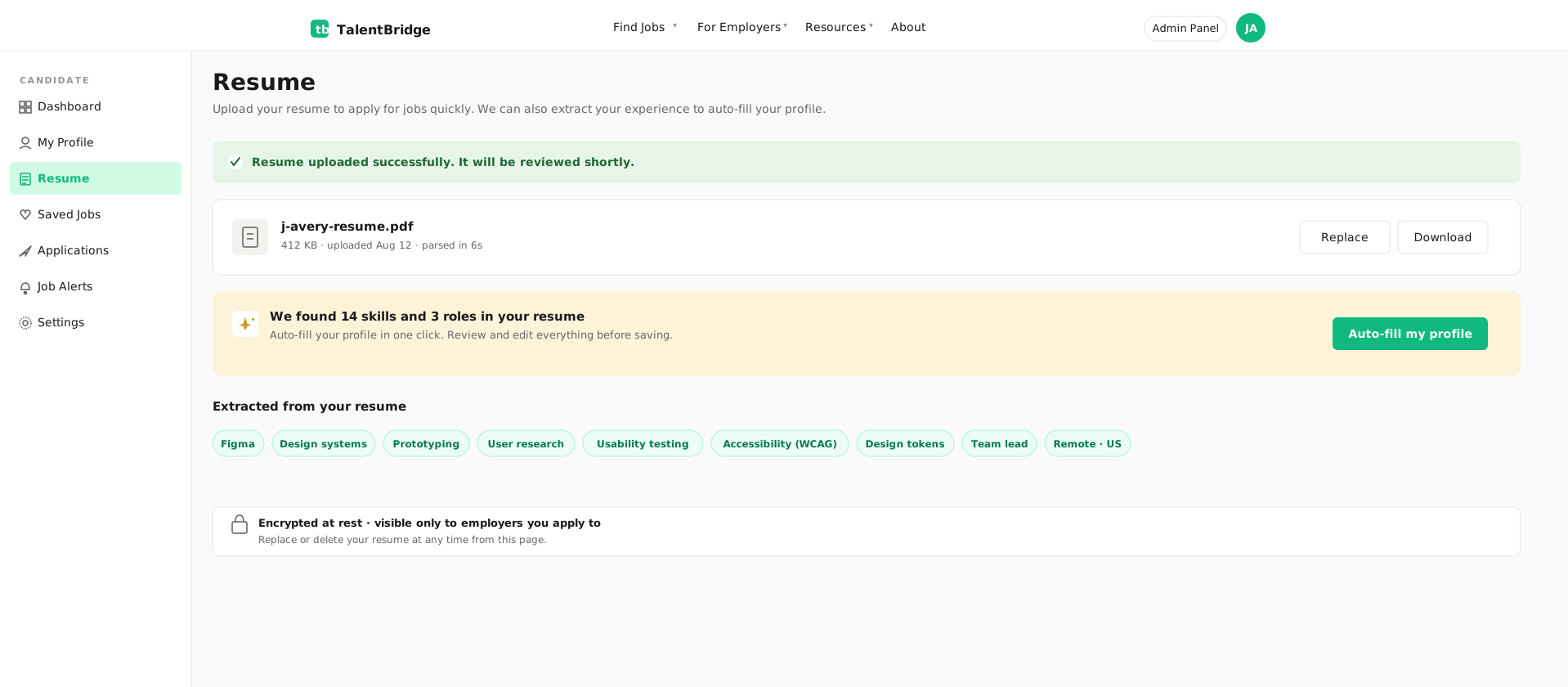
Confirmation, security messaging, and the option to auto-fill the profile from the parsed resume in one click.
Every match shows the score, the pay range, and the specific skills that matched — and the roles come from five different employers. One resume, one upload, the whole marketplace ranked. That is the part a single company's careers page can never do.
A tour of the candidate flow, from job detail through applications tracking, plus the platform admin surface. Every screen reads the same AI score, and every role carries its own employer.
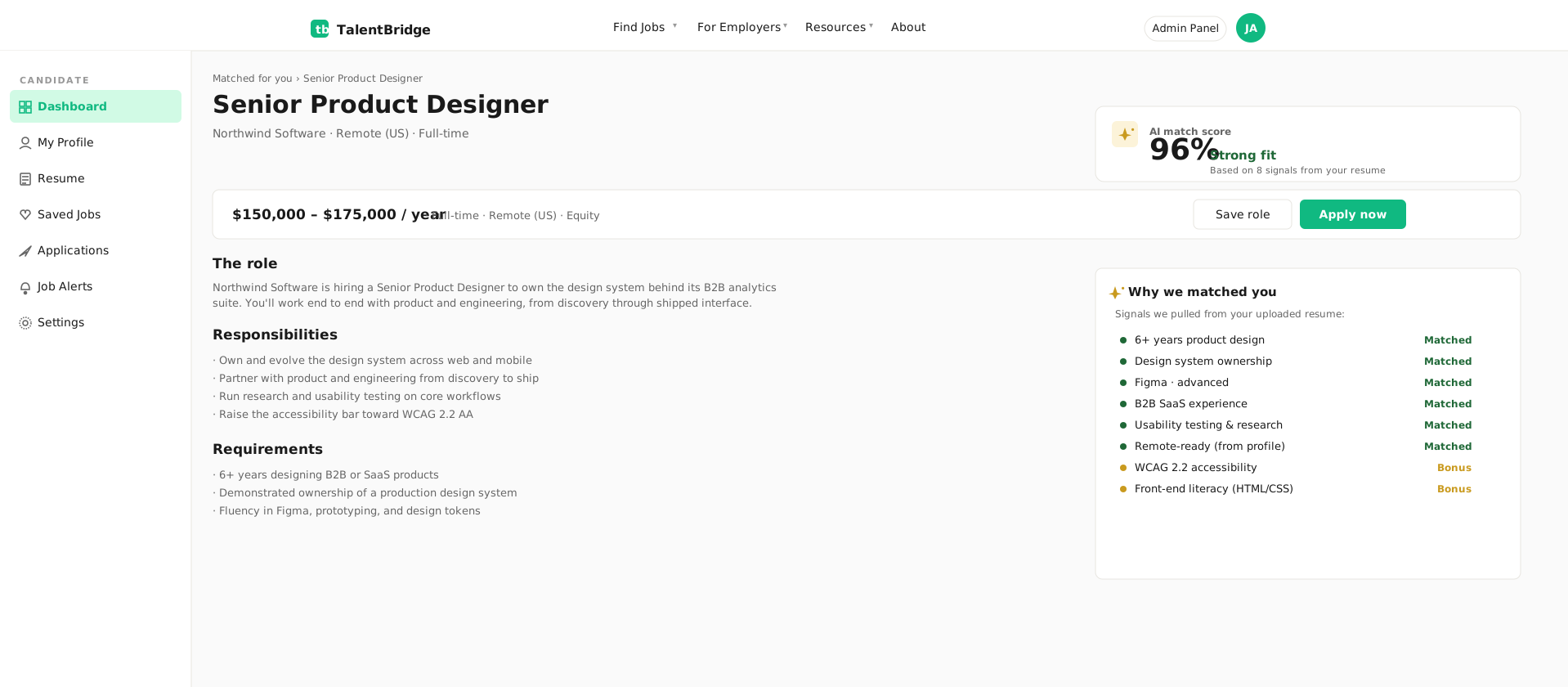
The candidate opens a role from one of the employers on the platform. The 96% match score is right there. Underneath: a full list of the specific signals from their resume the AI matched on. Certifications, years of experience, commuting radius, shift tolerance — each one confirmed or bonus.
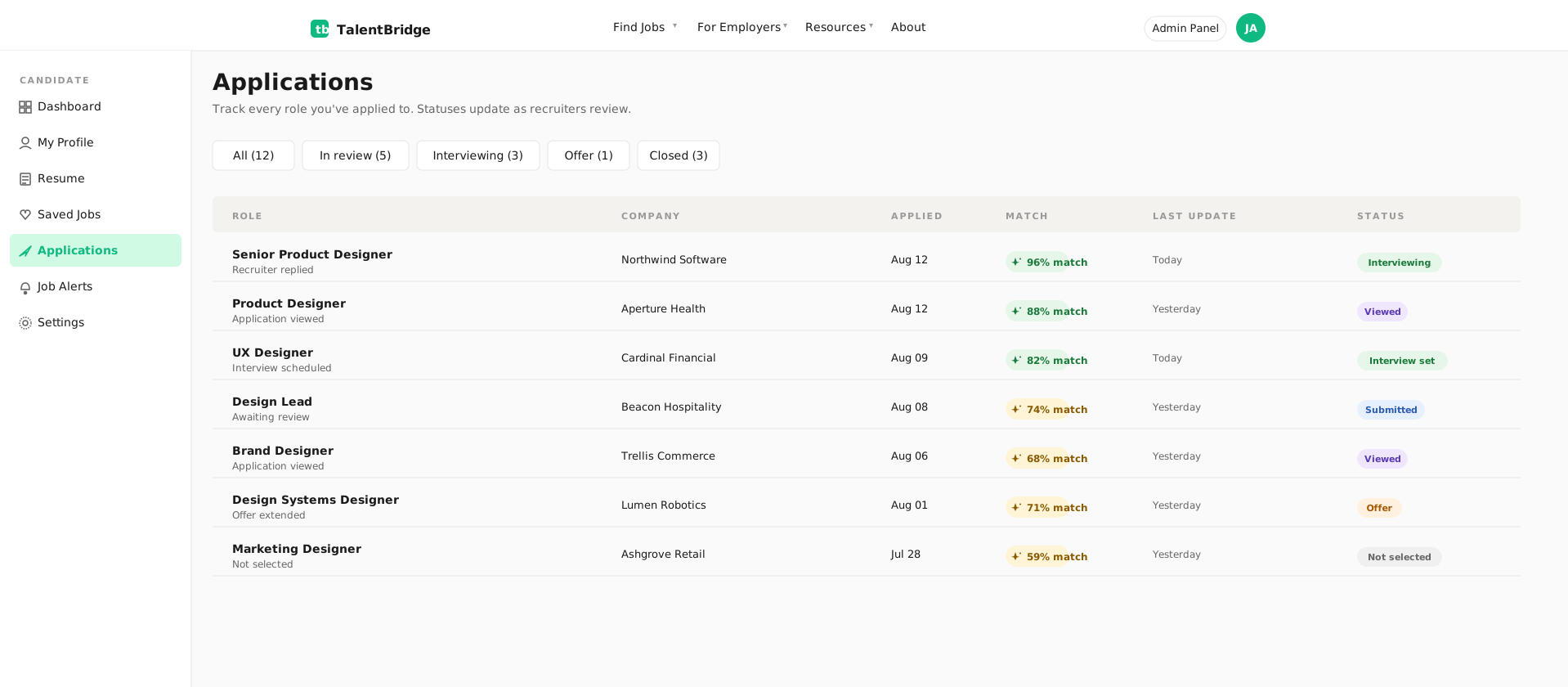
Every role the candidate applied to — across seven different employers — in one list, sorted by status. Match scores travel with each application so candidates can revisit the reasoning at any point. Filter chips mirror the pipeline stages employers use.
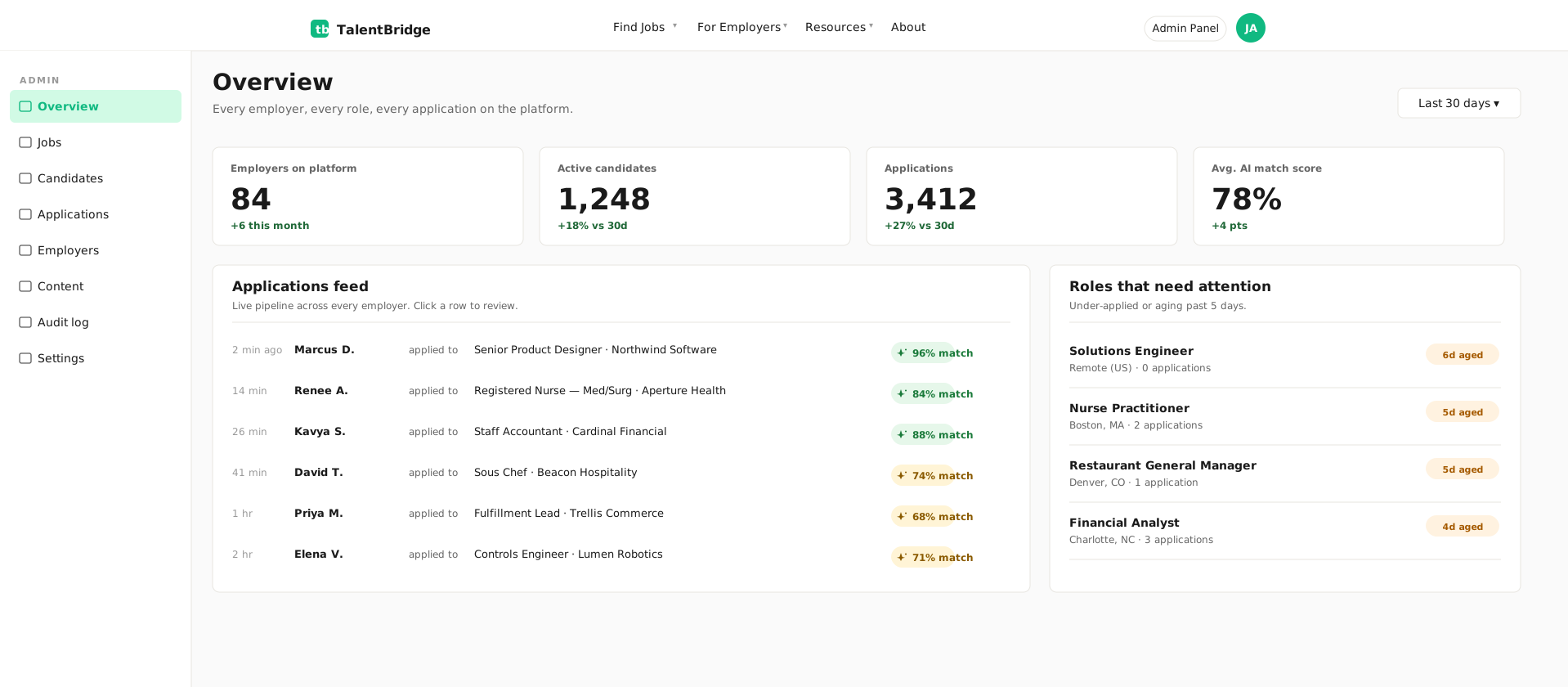
The platform admin sees the applications feed across every employer in real time, with the exact same match scores the candidate sees. Roles needing attention — under-applied, aging past five days — surface automatically. Applicant flow, matching quality, and role health, all on one page.
Extra detail on the design system, the AI flow, and the admin surface. Screens are recreations of the shipped build, drawn to its real design system. Every employer shown is fictional demo data, drawn from a different industry on purpose — the platform is not built for one vertical.
Product design, front-end, and AI integration, treated as one connected practice — not three vendors. If that's the conversation you're trying to have, this is where it starts.